
Report: Experiences of support of neurodivergent young Black people
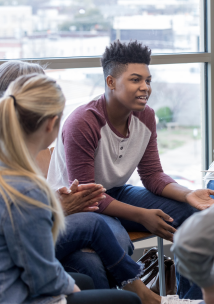
All 31 young people that came forward to participate in a focus group were aged between 18-25 years and identified as Black Caribbean, Black African or Black British, and lived in South Gloucestershire; four were carers.
Anyone who couldn't attend a focus group was given the opportunity to provide written feedback. This included people from non-Black backgrounds.
What did young neurodivergent people tell us they need?
- Raising awareness about living with neurodivergence to better inform community members and service provider staff, and to reduce stigma.
- Increasing the availability of peer support groups and mental health support.
- More support around job seeking; accessible career guidance and mentoring once someone is in a job.
- Accessible I.T training.
- Increasing the availability of peer mentoring programmes within and outside of education and training providers.
- Increasing staff awareness training on the intersectionality of living with neurodivergence.
Download the full report below.
Downloads
I know there are services meant to support neurodivergent young people, like counselling, tutoring, or mentoring programs, but they're not always easy to access.
Recommendations on co-production
We recommend all health and social care organisations working with neurodivergent young people should invite young people to co-design and co-produce information and educational resources on neurodivergent awareness, for use in educational settings, workplaces and more widely in the community, and build on this work with partner organisations.
We recommend that South Gloucestershire Council and BNSSG ICB, as well as local voluntary and community partners, review these findings in relation to their existing strategies and plans for neurodiversity support. This report can support reflection on whether current pathways, programmes and workforce training sufficiently address the needs identified by neurodivergent young Black people, and where further refinement or co‑produced improvement may be beneficial.
We further recommend that services working with neurodivergent young people – particularly young Black people – actively involve them in co‑designing information, resources and support offers, ensuring these are culturally sensitive, accessible and relevant to their lived experience.
Share your experiences of health and social care services as a neurodivergent person by completing our online feedback form.